
Last updated October 16, 2026
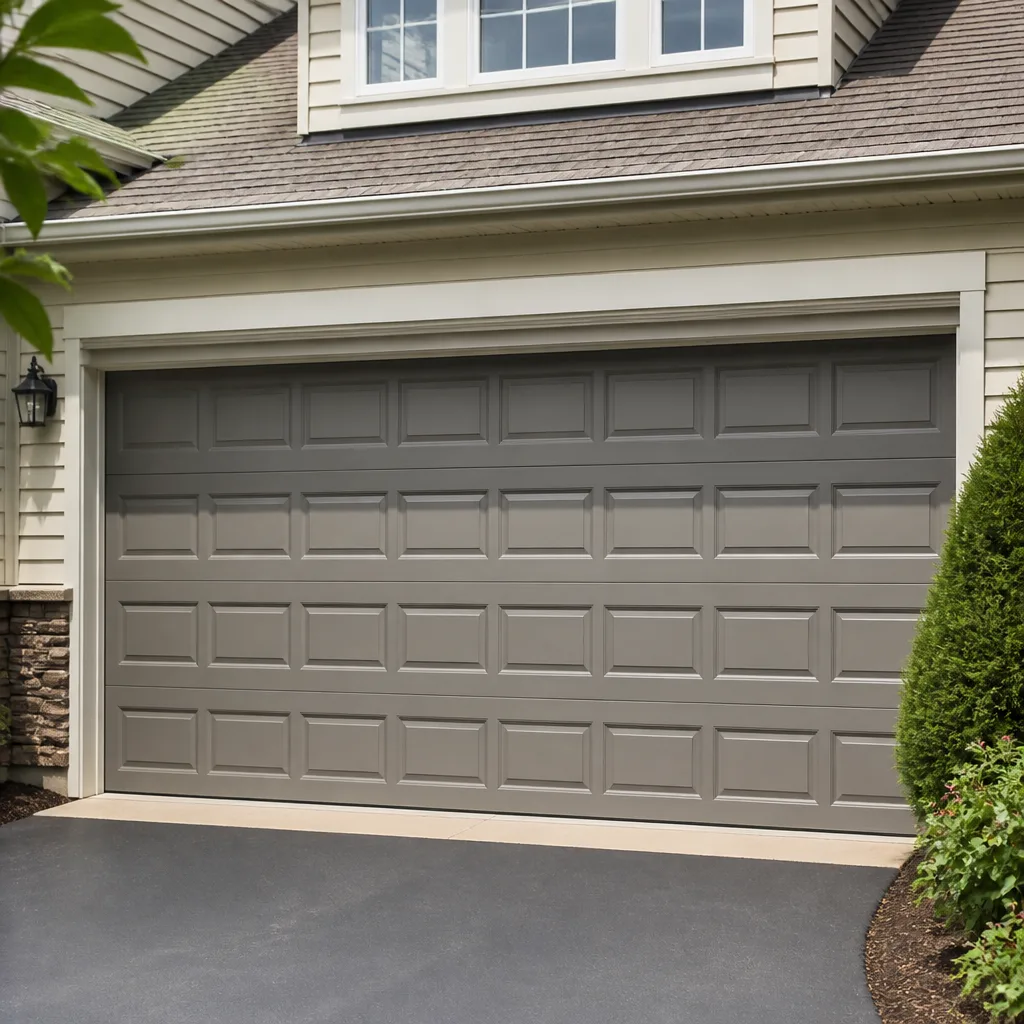 Raised-panel steel
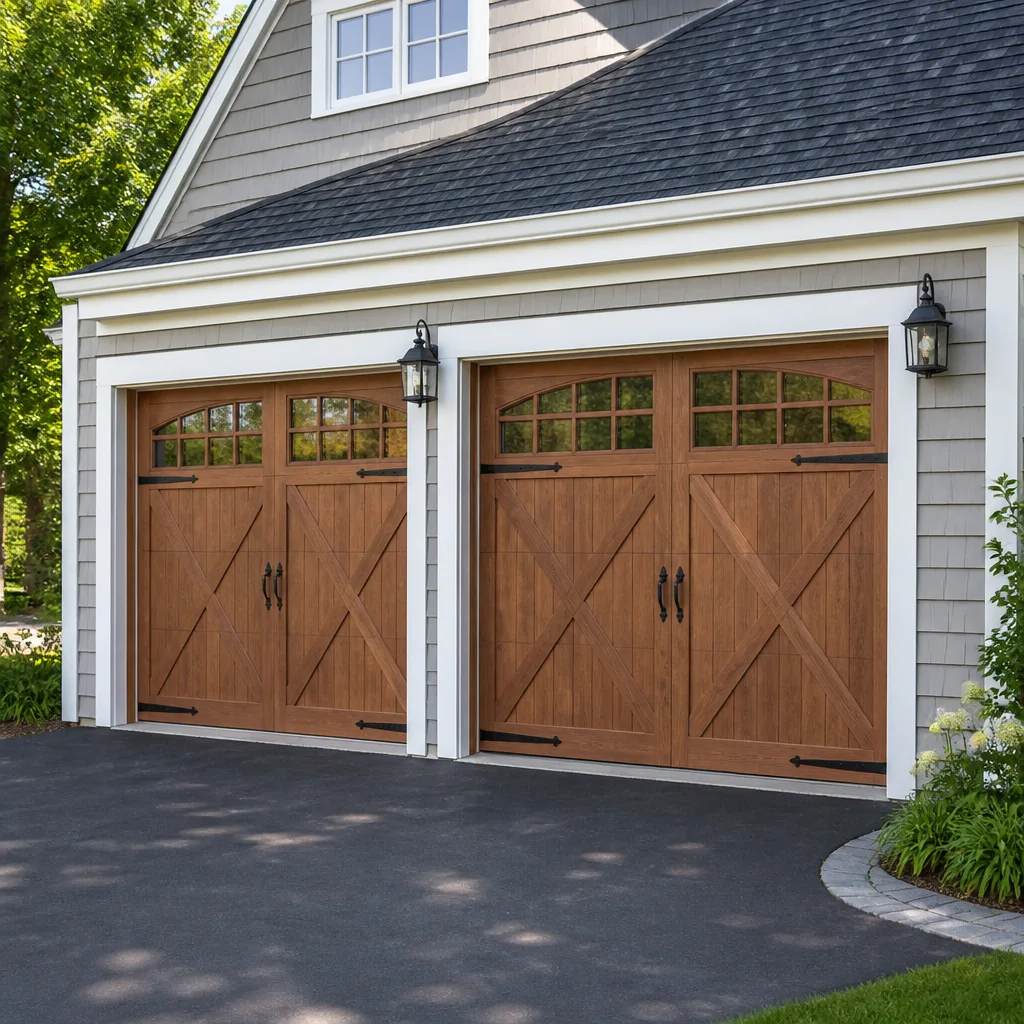 Carriage house
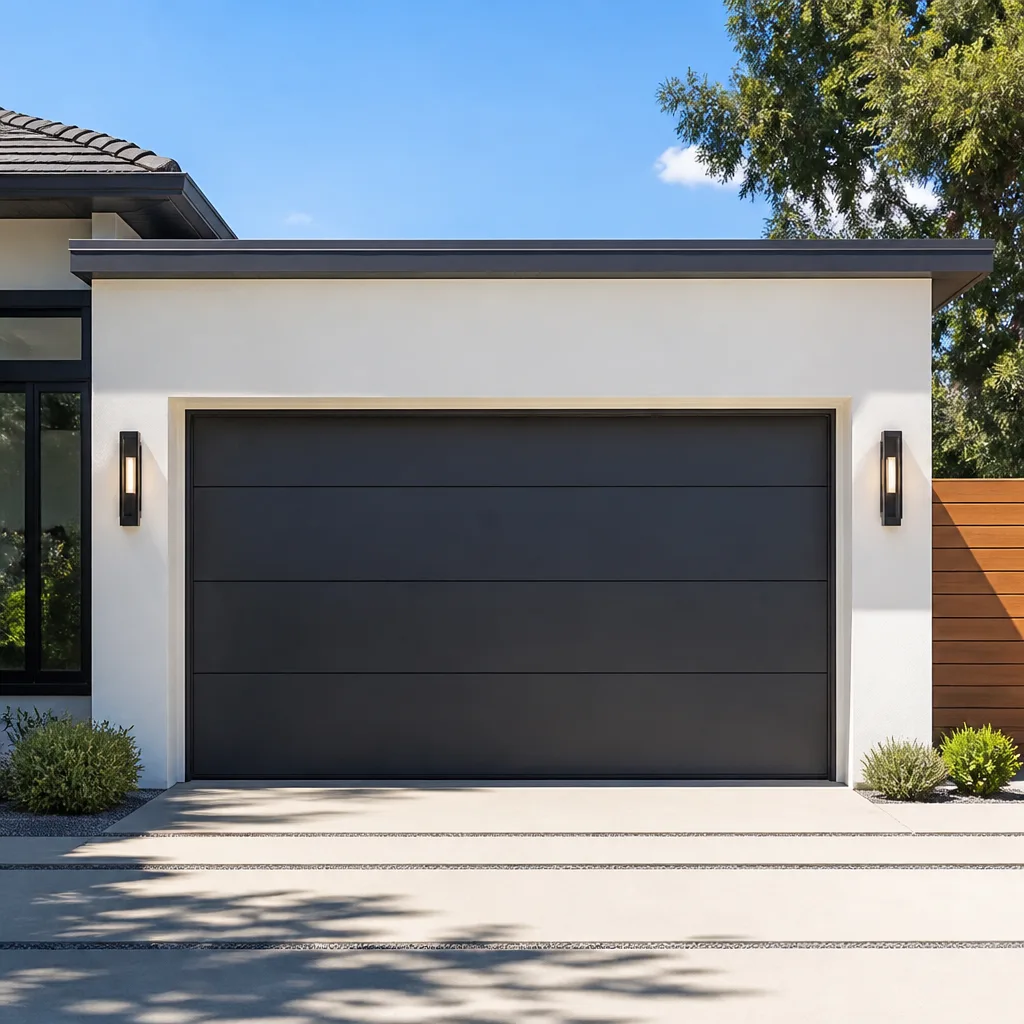 Modern flush
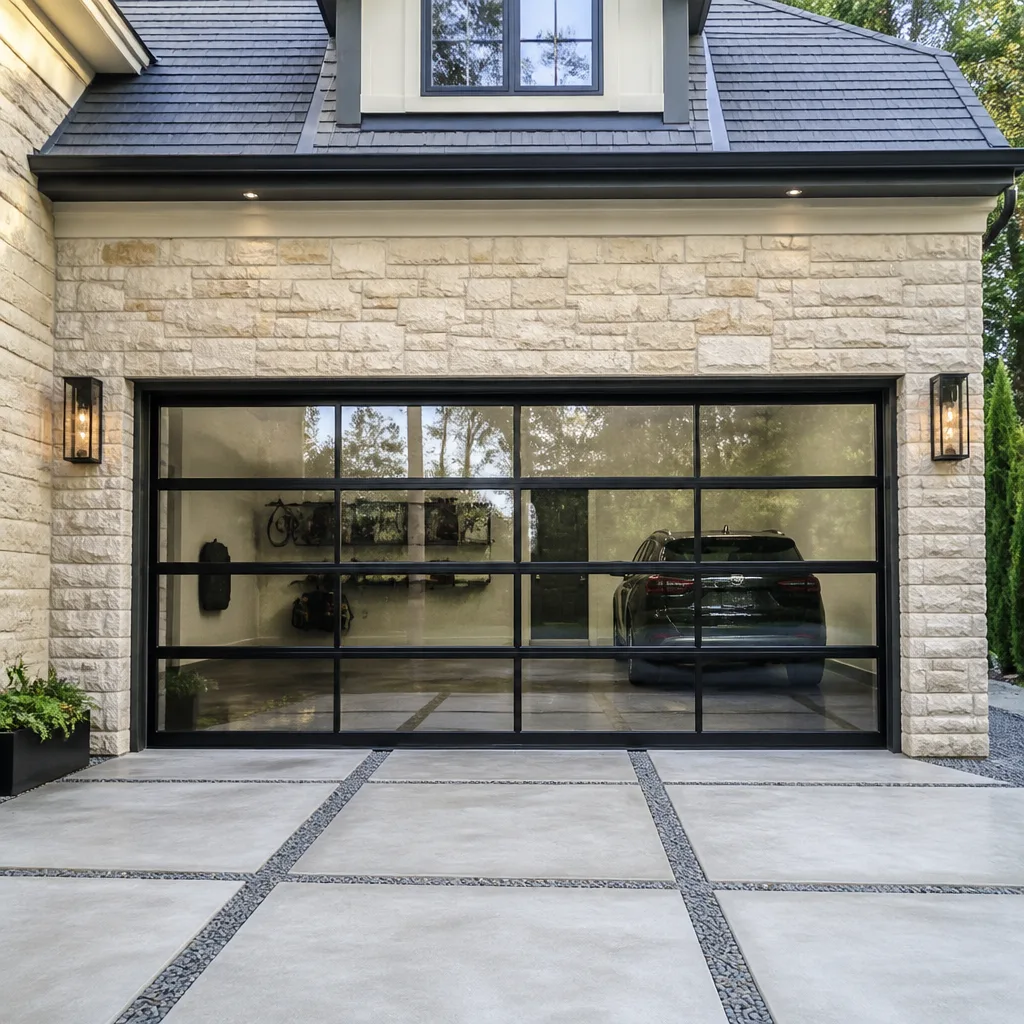 Full-view glass
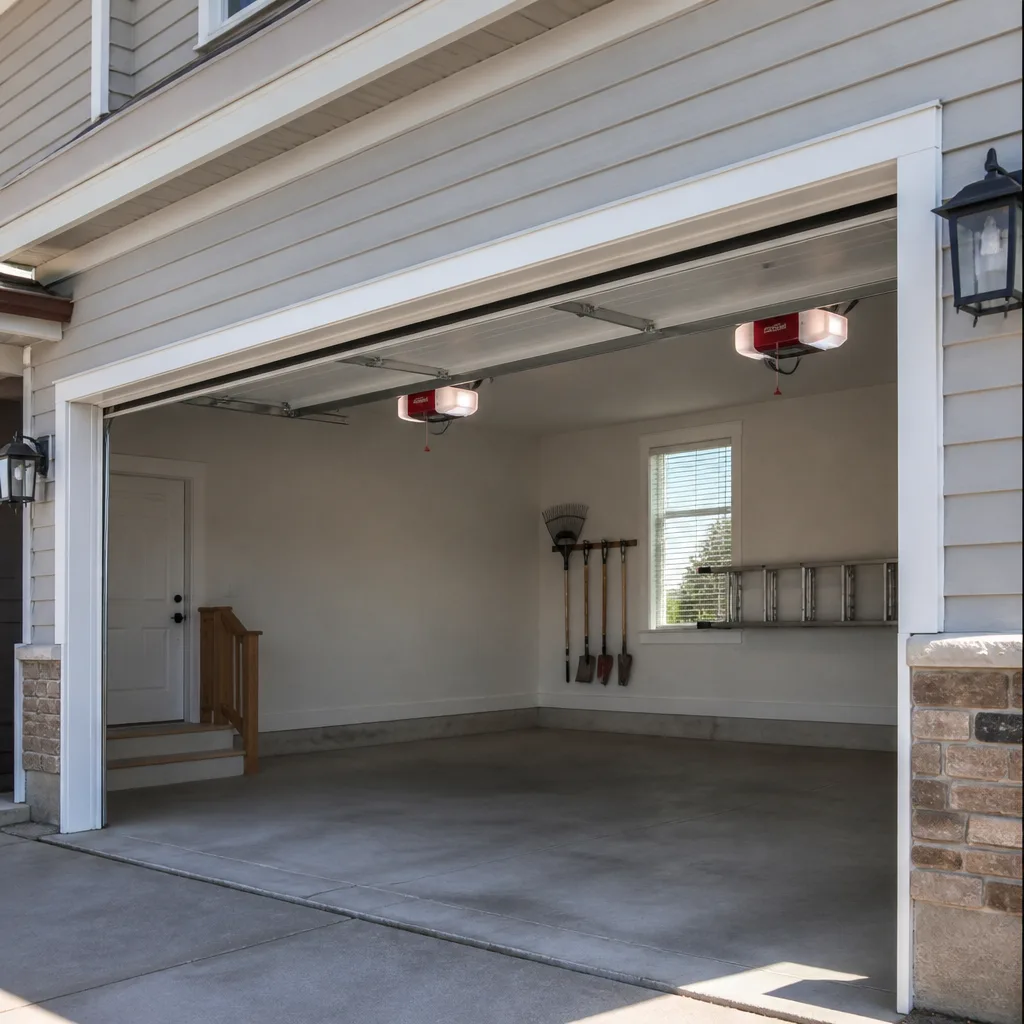 LiftMaster openers
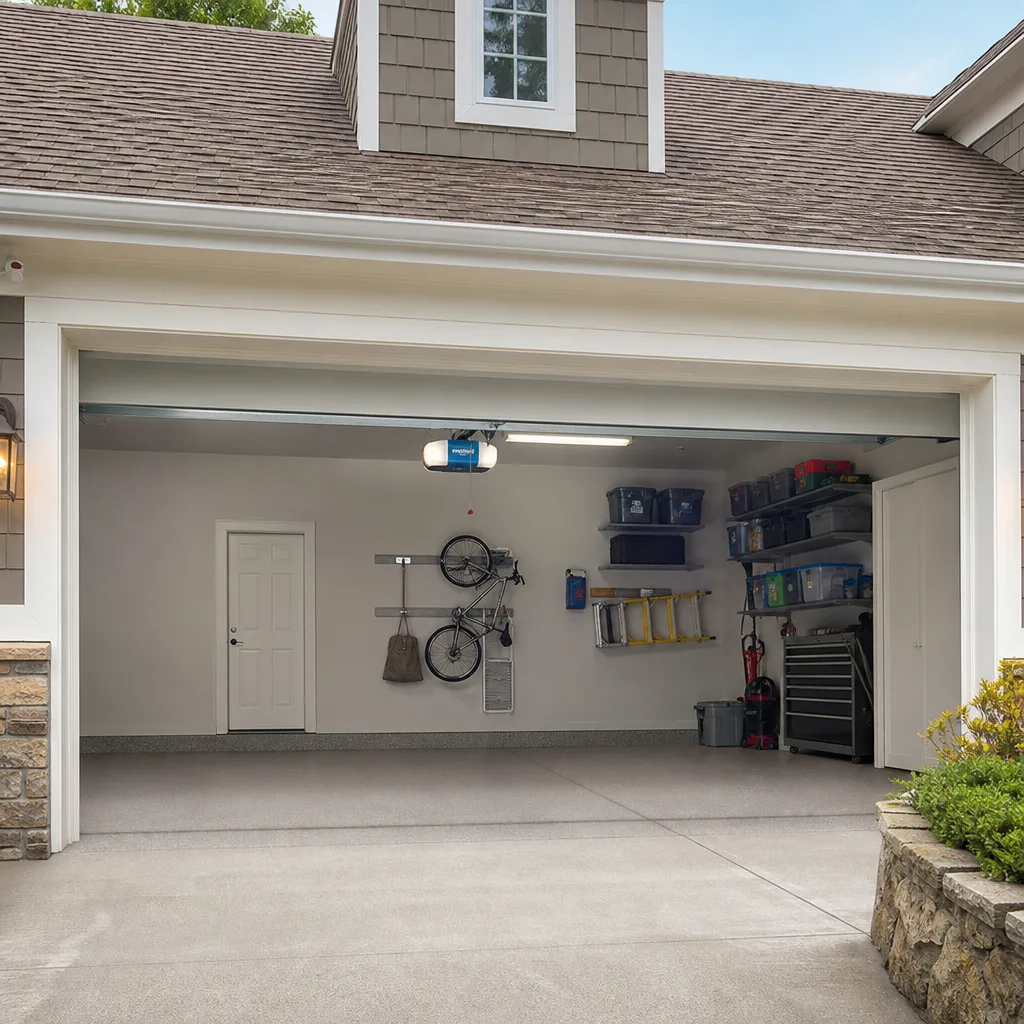 Chamberlain openers
Full 25-point door and opener safety check with every visit - springs, cables, rollers, tracks, and your LiftMaster or Chamberlain opener included
You get a price before we start. It does not change when the truck arrives.
Get your free estimateSeasonal Garage Door Care for Marietta: Year-Round Homeowner’s Guide
Marietta averages 47 nights below freezing per year. That’s not enough for anyone to think about winterizing anything, but it’s exactly enough for garage door springs to crack at the worst possible moment. The problem isn’t the cold itself. It’s the cycling. Atlanta’s northern suburbs warm into the 50s most winter afternoons, then dip below 32 after dark. Metal expands, contracts, expands, contracts. Over a single January, a torsion spring on a Marietta garage door endures more thermal stress than one in Minneapolis sees all winter. Our Complete Guide to Garage Door in Marietta walks through what that means for your door, season by season, and what to do about it before a spring lets go on a Monday morning at 7:15.
Quick Answer
Seasonal garage door maintenance in Marietta comes down to two danger windows: January-February freeze-thaw cycles that stress torsion springs, and July-August humidity that corrodes opener circuit boards. The essential tasks are a pre-freeze spring tension check in late fall, a pollen and debris track cleaning in spring, a monthly reversal and force safety test year-round, and a fall roller inspection before winter. Most of this takes under 30 minutes per season.
Table of Contents
- Why Marietta’s Climate Beats Up Garage Doors Differently
- Winter Care (January-February): The Freeze-Thaw Spring Danger Window
- Spring Care (March-May): Pollen, Storm Debris, and the Corrosion Cascade
- Summer Care (June-August): Humidity, Circuit Boards, and Opener Failure
- Fall Care (September-November): The Pre-Winter Prep Window
- The One Monthly Task (Year-Round): Reversal and Force Safety Test
- What Seasonal Maintenance Costs in Marietta
- Common Mistakes to Avoid
- When to Call a Professional
- Frequently Asked Questions
- The Bottom Line
Why Marietta’s Climate Beats Up Garage Doors Differently
Most garage door guides & resources are written for places with four real seasons. They assume you need to lubricate before a Minnesota winter or check for rust after a New England spring melt. Marietta’s calendar doesn’t work that way. We have about two months of genuine cold, a long stretch of 90-degree humidity, and a pollen season that coats everything with a fine yellow film that gets into every hinge, roller, and sensor.
Here’s what the Georgia climate actually does to your door:
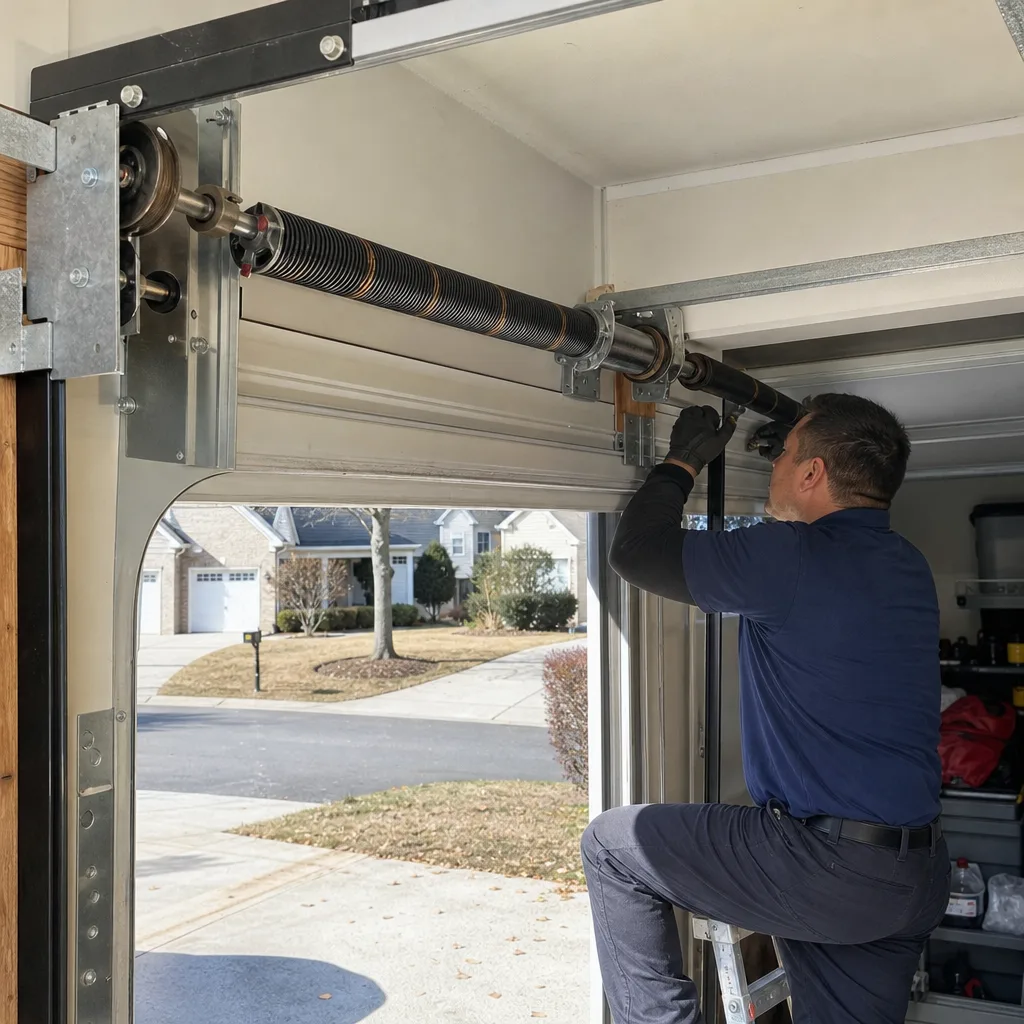
- Freeze-thaw cycling stresses springs. Torsion springs, the horizontal coils above your door that do most of the lifting, are under constant tension of 150 to 250 pounds per square inch. Every temperature swing makes the steel expand and contract microscopically. Over repeated cycles, microfractures form. That’s why spring failures in Marietta spike in January and February, not because it’s cold, but because it keeps changing.
- Humidity breeds corrosion inside opener motors. Marietta’s average summer humidity sits between 70 and 85 percent. Circuit boards inside opener motor housings don’t love that. Condensation forms when the garage cools at night, moisture collects on solder joints, and corrosion starts. We see more opener logic board failures in July and August than any other time of year.
- Pollen is an abrasive. Cobb County’s spring pollen load, heavy with pine and oak, settles into track channels and roller bearings. It mixes with the silicone lubricant on your tracks and becomes a gritty paste. That friction wears rollers faster and makes the opener work harder.
- Summer thunderstorms bring wind-loading. Doors take lateral force during storms. If your door has any slop in the hinges or track brackets, a strong gust will find it.
At Marlow Garage Door Repair Marietta home, we’ve seen doors in East Cobb and West Marietta that look fine from the outside but are six months from a snap because of these climate factors. The rest of this guide breaks down what to do about each one.
Winter Care (January-February): The Freeze-Thaw Spring Danger Window
If you only read one section of this guide, make it this one. January and February are when torsion springs let go in Marietta. The failure rate in these two months runs noticeably higher than the rest of the year. The reason comes down to metallurgy and weather patterns. A spring that’s been through five or six Georgia winters has accumulated enough thermal stress to snap, and it rarely gives much warning before it does.
Before the serious cold arrives, run this check:
- Disconnect the opener. Pull the red emergency release cord so you can operate the door manually.
- Lift the door halfway. It should stay in place on its own if the springs have proper tension. If it drifts down, the springs are weakening.
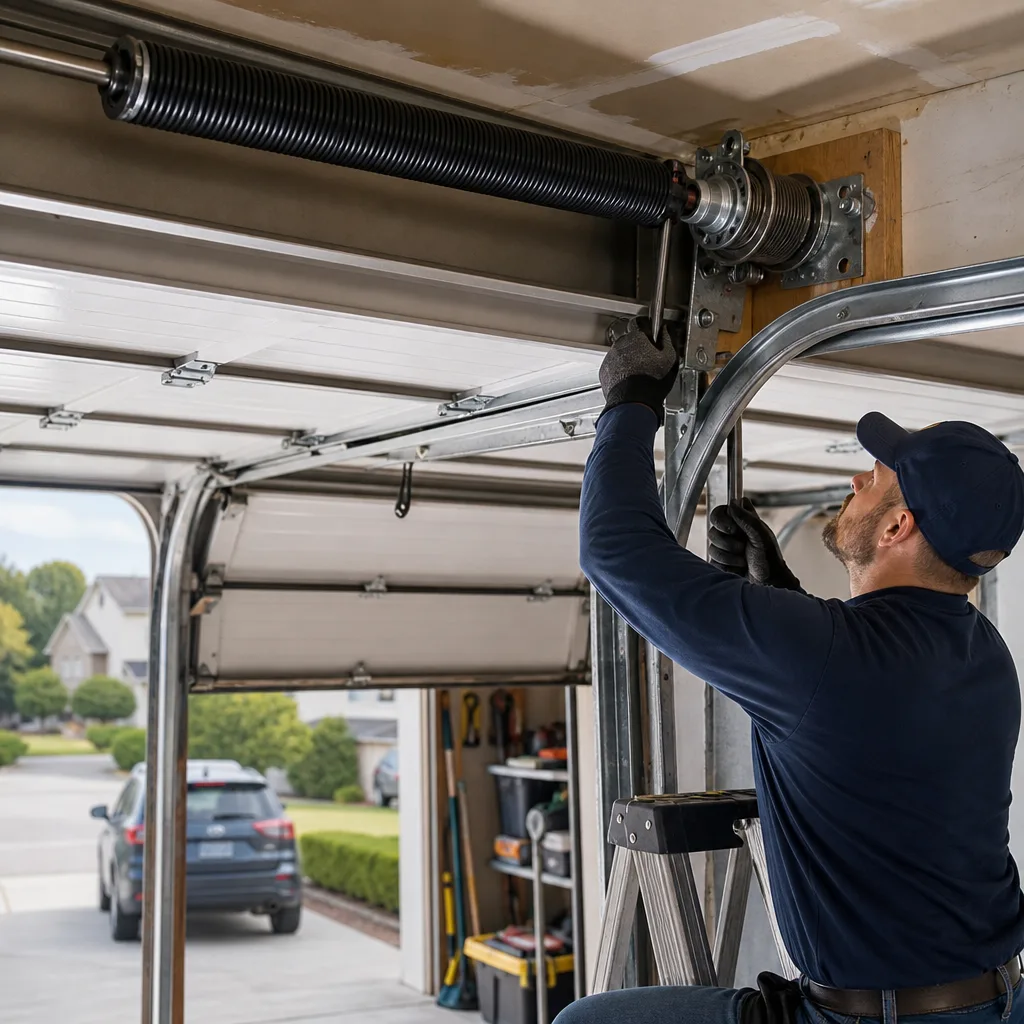
- Look at the spring coils. Check for gaps between coils, visible rust, or a slightly stretched appearance at the ends. Any of these signals a spring near failure.
- Listen. Operate the door slowly and listen for popping or creaking from the springs. That sound means metal strands are shifting under load.
Here’s the thing: if your door is more than 7 or 8 years old and you’ve never had the springs replaced, they’re on borrowed time. Torsion springs are rated for about 10,000 cycles, which translates to roughly 7-9 years of normal use for most Marietta households. When they break, it’s not a slow failure. It’s a loud bang that sounds like a gunshot, and the door becomes nearly impossible to lift because all that weight, usually 150-250 pounds for a standard two-car door, is suddenly unassisted.
We get the calls every January. Homeowners tell us they heard a noise, tried the opener, and the motor strained against the full weight of the door. That strain is bad for the opener motor. Worst case, it burns out the motor while you’re trying to figure out why the door won’t move. If you want the full picture on spring work, see our page on Garage Door Spring Repair in Marietta.
Also worth checking in winter: the weather seal along the bottom of the door. When temps dip below freezing, the rubber stiffens and can crack if it’s already brittle. A cracked seal lets cold air in, which makes your water heater work harder in an attached garage setup. A replacement seal costs $80-$180 installed in Marietta, and it’s a 30-minute fix.
Spring Care (March-May): Pollen, Storm Debris, and the Corrosion Cascade
Spring in Marietta means yellow. Every surface, including your garage door tracks, gets coated in pine and oak pollen. The stuff is fine enough to work into the ball bearings of your rollers, where it mixes with whatever lubricant was already there and forms a grinding paste. Left through the summer, that paste accelerates roller wear and forces the opener motor to work harder on every cycle. Rollers that should have lasted 10 years can go bad in 6.
Here’s the spring protocol we recommend:
- Clean the tracks. Wipe the inside of both vertical and horizontal tracks with a dry cloth. Get the corners where the track curves, because that’s where pollen collects. Don’t use grease or oil; it traps more debris.
- Clean the rollers. If you have steel rollers, wipe them down and add one drop of silicone lubricant to each bearing. Nylon rollers just need a wipe. Don’t use WD-40. It displaces the factory grease in the bearings and accelerates wear.
- Check the weather seal. Run your hand along the bottom seal and the side seals. Look for gaps, tears, or spots where it’s pulled away from the door. Pollen getting past the seal becomes pollen inside your garage.
- Test the auto-reverse sensors. Place a 2×4 or a roll of paper towels in the door’s path and close the door. It should reverse within two seconds of contact. If it doesn’t, that’s a safety issue, not a cosmetic one.
Spring storms bring their own concerns. High winds can push a door sideways if the track brackets have loosened. After any storm with gusts over 40 mph, check the bolts holding the track to the wall. Tighten anything loose. A door that comes off its track is one of the more common Garage Door Repair in Marietta calls we field in April and May.
Spring is also a smart time to check cable condition. The lift cables, the steel braided lines running along each side of the door, take tension from the springs. Look for fraying, especially near the bottom bracket where the cable attaches to the door. A frayed cable is a time bomb. When it snaps under tension, it whips with serious force. If you see any fraying, stop using the door and call a pro. We cover this in depth on our Garage Door Cable Repair in Marietta page.
Summer Care (June-August): Humidity, Circuit Boards, and Opener Failure
Marietta summers are brutal on garage door opener electronics. The pattern we see at Marlow, year after year: a homeowner calls in late July or early August saying the opener just stopped responding. No warning. Maybe the wall button works but the remote doesn’t, or the door starts and stops randomly. Nine times out of ten, moisture has gotten to the circuit board.
The mechanism is simple. Hot air holds more moisture. During the day, your garage can hit 100 degrees-plus with 80 percent humidity. At night the temperature drops, the air can’t hold that moisture anymore, and condensation forms on the coldest surface available. That’s often the metal housing of your opener motor and the circuit board inside it.
Early warning signs of humidity-related circuit board damage:
- The opener runs fine from the wall button but the remote only works when you’re standing directly under the unit.
- The door stops mid-cycle and reverses for no reason.
- The opener light flickers or stays on dimly when the unit isn’t running.
- You hear a quiet buzzing from the motor housing even when the door isn’t moving.
- The opener randomly loses its programming and forgets your remotes.
If you catch these signs early, you can sometimes save the board by drying out the motor housing. Unplug the opener, remove the light cover, and let it air out for a day. Place a small dehumidifier in the garage if you have one. But if corrosion has already set in on the solder joints, that board is going. Replacing a logic board runs $120-$250 on most Genie, Chamberlain, or LiftMaster models. A full opener replacement runs $350-$650 installed, depending on the model and features.
Prevention is cheap. Keep air moving in the garage during summer. If you have a vent or can crack the side door for an hour a day, it makes a real difference. Some Marietta homeowners run a small box fan in the garage on the worst days. It’s not pretty, but it’s cheaper than a new opener.
Fall Care (September-November): The Pre-Winter Prep Window
Fall is the most underrated season for garage door maintenance in Marietta. Most homeowners ignore their door until something fails. But the people who spend 20 minutes on it in October are the ones who don’t end up calling us on a January morning when the door won’t open and they’re late for work.
The logic is simple: you want to replace wear items before the stress window hits. Rollers that are already worn will only get worse when cold stiffens everything up. A spring that’s showing early signs of fatigue in October is one you can replace on your schedule for a predictable price. In January, you replace it in an emergency at the worst moment.
Here’s the fall checklist we recommend to every Marietta homeowner:
- Inspect rollers closely. Steel rollers with 10-plus years of service, or nylon rollers with cracking or flat spots, should be replaced now. Roller replacement runs $120-$200 for a full set installed, and it’s the single highest-value maintenance item.
- Check spring balance. Run the same half-lift test described in the winter section. If the door doesn’t hold at the halfway point, the springs need professional attention. Replacing them in October means a quoted price and a scheduled visit. Replacing them in February means an emergency call.
- Lubricate hinges and rollers. One drop of silicone spray per hinge pivot point and one drop per roller bearing. That’s it. More is not better.
- Clean and tighten all bolts. Track brackets, hinge plates, and opener rail. Use a socket wrench, not pliers.
- Replace the bottom weather seal if it shows cracks. A new seal before winter keeps cold drafts out and prevents the seal from fully splitting during a freeze.
October and November are also the cheapest months for repair work in general. Service demand drops between back-to-school and the winter failure spike, which means you can often schedule your visit for the exact time you want rather than taking a first-available slot.
The One Monthly Task (Year-Round): Reversal and Force Safety Test
If you do nothing else on this list, do this one. It takes two minutes, it costs nothing, and it’s the safety check that almost no Marietta homeowner performs regularly.
The auto-reverse mechanism on your garage door opener exists to stop the door if a child, pet, or object is in its path. Since 1993, federal law has required all openers to include this feature. But like any mechanical system, the force settings drift over time. A door that reverses properly in March might not reverse properly in September. The only way to know is to test it.
Here’s the test:
- Place a 2×4 piece of lumber flat on the ground in the door’s path.
- Close the door using the wall button or remote.
- The door should reverse within two seconds of contacting the board.
- If it doesn’t reverse, or if it hesitates before reversing, the force settings need adjustment.
There’s also a second test for the photoelectric sensors, the small eyes mounted about six inches off the ground on each side of the door opening. Wave your hand through the beam while the door is closing. The door should stop and reverse immediately. If it doesn’t, check that the sensors are aligned and clear of debris. If they are aligned and it still doesn’t work, the sensors or the opener logic board may need replacement.
We recommend running both tests on the first of every month. Put it in your phone. It takes two minutes. There is no other single maintenance habit that does more for the safety of a household with kids or pets.
One more year-round note: if you ever hear grinding, scraping, or popping sounds when the door runs, don’t wait. Sounds are the earliest warning sign of a mechanical problem that will get more expensive the longer it goes unaddressed. Most Garage Door Repair in Marietta issues start small and stay small if caught early.
What Seasonal Maintenance Costs in Marietta
People always ask what they should budget. Here’s a straight answer. Most seasonal maintenance tasks are free or nearly free. The ones that cost money are cheap compared to the emergency they prevent.
DIY Seasonal Maintenance Costs
- Silicone lubricant: $6-$12 at any hardware store in Marietta. One can lasts about a year with monthly application.
- Bottom weather seal replacement: $25-$45 for the seal itself at Home Depot or Lowe’s, $80-$180 if you have a pro do it. Most homeowners can handle this themselves with a hacksaw and a screwdriver.
- Track cleaning supplies: Dry cloths you already own. Zero dollars.
Pro Maintenance and Repair Costs in Marietta
- Full roller replacement (installed): $120-$200. Worth doing every 8-10 years, or sooner if rollers are visibly worn.
- Hinge replacement (per hinge, installed): $40-$80 depending on the hinge position and door weight.
- Spring replacement (pair, installed): $150-$290 depending on spring type, size, and cycle rating. Standard for a two-car door in Marietta runs $200-$250.
- Logic board replacement on opener: $120-$250. Full opener replacement runs $350-$650 depending on features.
- Cable replacement (both sides, installed): $150-$250.
These numbers reflect what Marietta homeowners should expect in 2025. Southern markets run slightly lower than the national average for garage door work because the market is competitive. The key is getting a written price before work starts. At Marlow, you see the exact number before any wrench turns. No surprises. That’s the standard we’ve held since 2002.
Common Mistakes to Avoid
- Lubricating with WD-40. WD-40 is a solvent, not a lubricant. It strips the factory grease from roller bearings and leaves them dry. Use a silicone spray or lithium grease designed for garage door hardware.
- Ignoring a slow drift. If your door doesn’t stay put at the halfway point, that’s not a quirk. It means the springs are losing tension. The next stage is a full spring failure, which never happens at a convenient time.
- Cleaning tracks with oil or grease. Oil in the tracks attracts dust and pollen. Tracks should be clean and dry. The only lubrication points on a modern garage door are the hinges, roller bearings, and spring coils.
- Skipping the monthly reversal test because “the door has always been fine.” Force settings drift. Doors that worked perfectly for years can develop unsafe reversal timing in a matter of months. Test every month.
- Letting spring and pollen buildup sit through summer. That gritty paste in the tracks hardens as it heats and dries. By August, it’s functioning like sandpaper on your rollers. Spring cleaning matters.
- Running a door with a frayed cable. A cable with visible fraying can snap at any moment under full tension. Until you get it looked at, stop using the door. It’s a serious injury risk.
- Assuming a noisy door is “normal for an old door.” Noise is information. Grinding means bearings are gone. Popping means spring strands are shifting. Squealing means hinges are dry. Each sound points to a specific fix, and early fixes are cheaper.
When to Call a Professional
Most seasonal maintenance is DIY-friendly. Some things are not. If your torsion spring shows gaps, rust, or stretch marks, call a professional. The spring is under enough tension to cause serious injury if it lets go while you’re working near it. Never attempt to adjust or replace a torsion spring yourself. If a lift cable is frayed or the door has come off its track, that’s also a professional job. The same goes for any opener problem involving the circuit board or motor. These components are under spring tension, electrical load, or both, and the margin for error is zero.
Marlow Garage Door Repair Marietta home offers free estimates across Marietta and Cobb County. Call (912) 575-7540 and a live person answers, 24/7. We’ll give you a written price before any work starts, and every repair is backed by the 365-Day Done Right Promise: if it isn’t right, we fix it free for a full year.
Frequently Asked Questions
Twice a year is the sweet spot for the Marietta climate: once in late spring after pollen season ends, and once in late fall before the freeze-thaw window opens. Between those visits, run the monthly reversal test and listen for new sounds. Most of our customers do the monthly checks themselves and call us for the seasonal ones.
If you’d rather not get on a ladder, we can handle both seasonal visits for you. Call (912) 575-7540 and we’ll schedule it.
Look for gaps between spring coils, visible rust, a stretched look at the ends, or a door that drifts down when you lift it halfway and let go. Any of those signs means the spring is near the end of its service life. A spring that’s 7-plus years old and showing any of these indicators should be replaced proactively rather than waiting for it to snap.
For a specific price on spring replacement, call (912) 575-7540. We quote over the phone and honor the number in writing.
Yes. Marietta’s summer humidity levels, regularly above 75 percent, cause condensation on the logic board inside the opener housing. Over time, that moisture corrodes solder joints and causes erratic behavior: the remote stops working, the door reverses for no reason, or the opener forgets its programming. A dehumidifier or a fan in the garage during summer reduces the risk.
DIY seasonal maintenance runs about $20-$50 per year for lubricant and a weather seal. Professional maintenance, which includes a full inspection, spring tension adjustment, and lubrication of all moving parts, typically runs $80-$150 per visit in the Marietta market. Repairs like spring or roller replacement are additional but should be quoted before any work starts.
For an exact maintenance price in your part of Cobb County, call (912) 575-7540. Estimates are free.
You can replace the rollers that sit inside the vertical track brackets if the door is up and the spring is intact, but we don’t recommend it. The bottom bracket rollers on a torsion spring system are under spring tension, and removing them without proper training can cause serious injury. Roller replacement is one of the lower-cost professional services, typically $120-$200 for a full set. That’s a reasonable price for not getting hurt.
We’re certified on eight major brands: LiftMaster, Chamberlain, Genie, Clopay, Amarr, Wayne Dalton, Craftsman, and Raynor. Whether your opener is a Genie from the 90s or a brand-new Chamberlain with smart features, the technician who arrives already knows the equipment. We service all of Marietta and the surrounding Cobb County area.
Call (912) 575-7540 and we’ll confirm availability for your address.
The Bottom Line
Marietta’s climate is hard on garage doors in two specific ways: winter freeze-thaw cycles crack springs, and summer humidity corrodes opener electronics. The maintenance calendar is simple. Test the reversal safety mechanism monthly. Clean pollen from the tracks every spring. Inspect rollers and springs every fall before the January stress window. Replace wear items before they fail, because the failure always comes at the worst possible time. And when something goes wrong that you can’t safely handle, call a professional who gives you a written price before any work starts. That’s how you avoid the 7 a.m. garage door emergency.
Written by Jaylen Ross, Owner at Marlow Garage Door Repair Marietta, serving Marietta since 2002.
Styles & brands we work with
See the difference
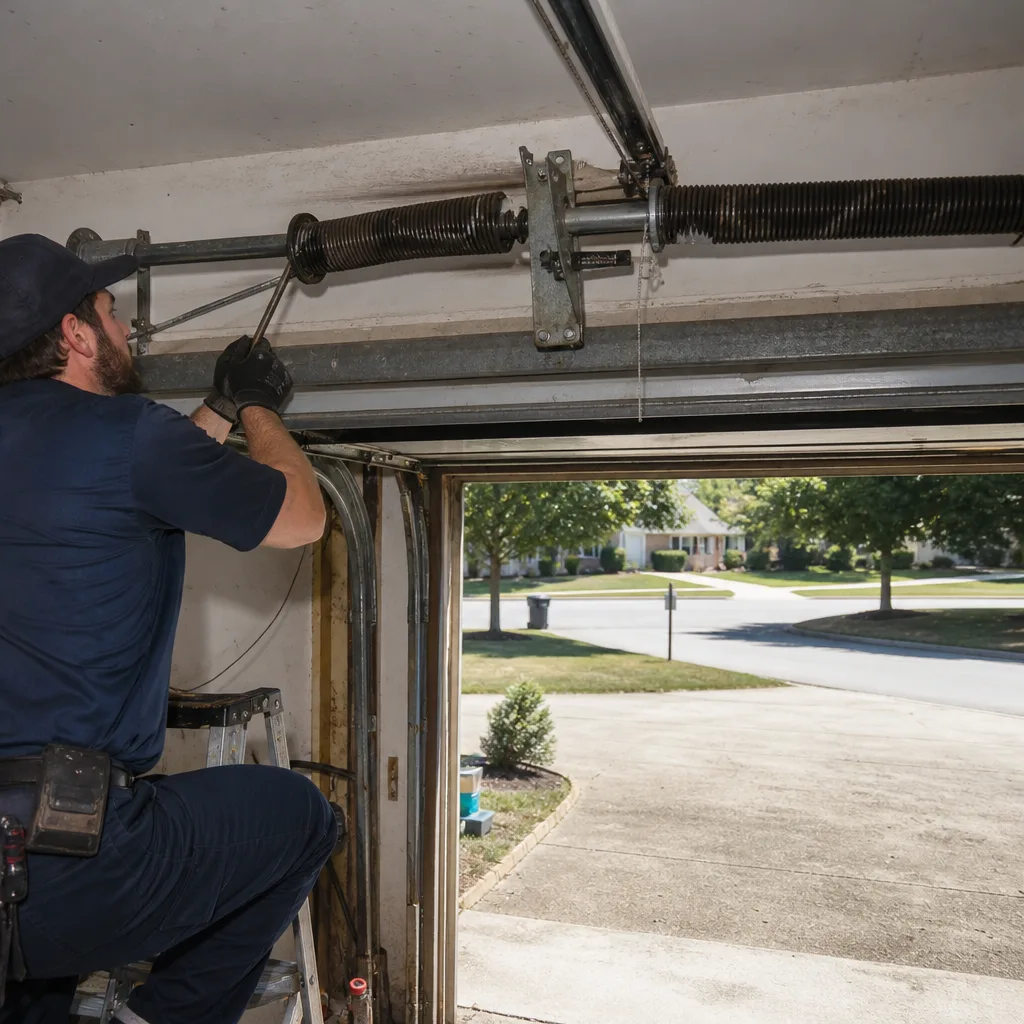 Before
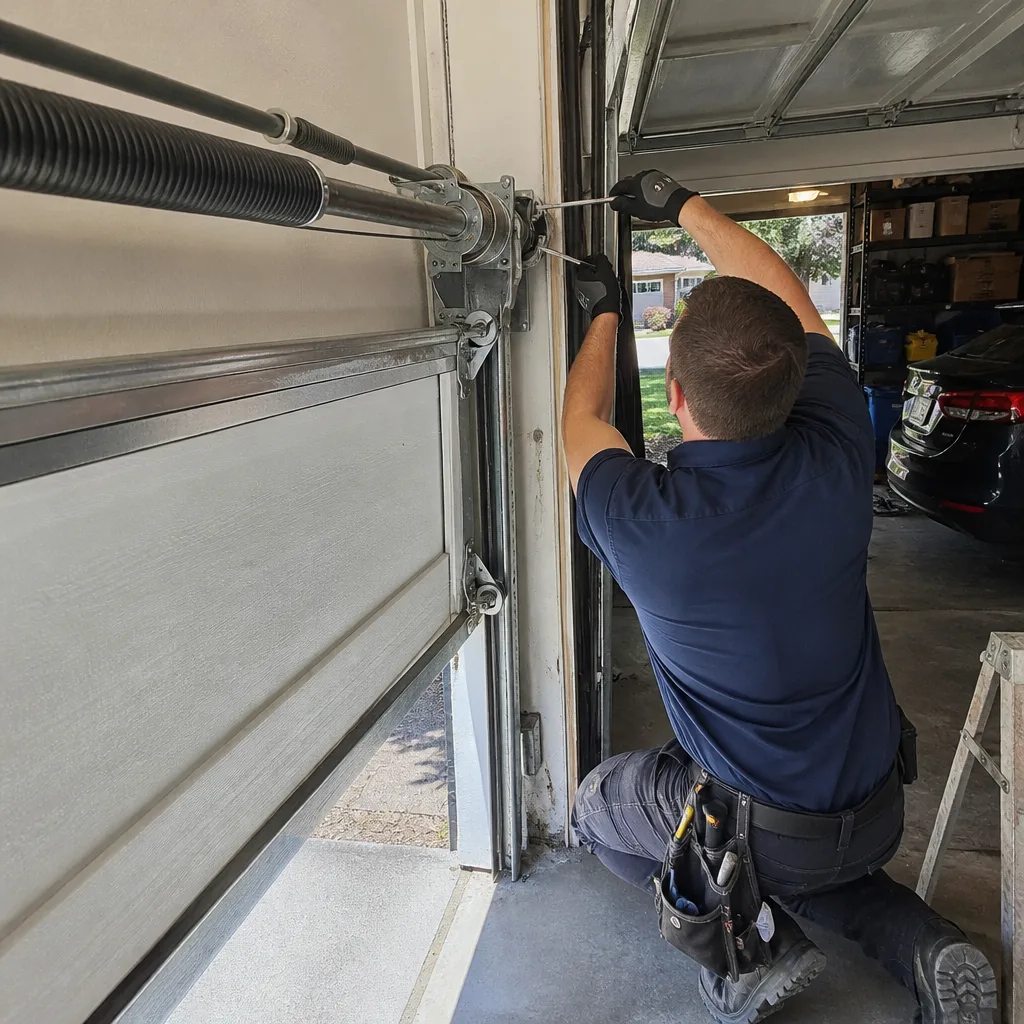 After
After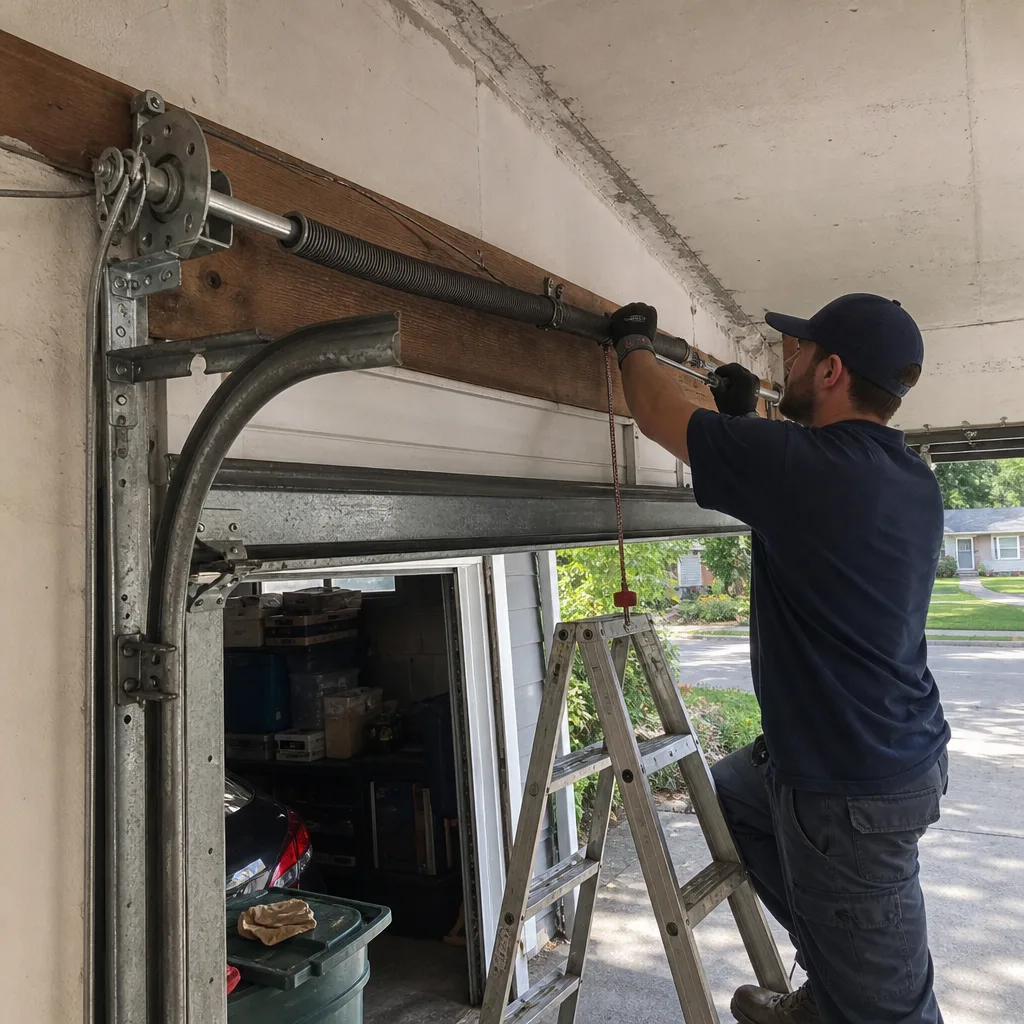 Before
 After
After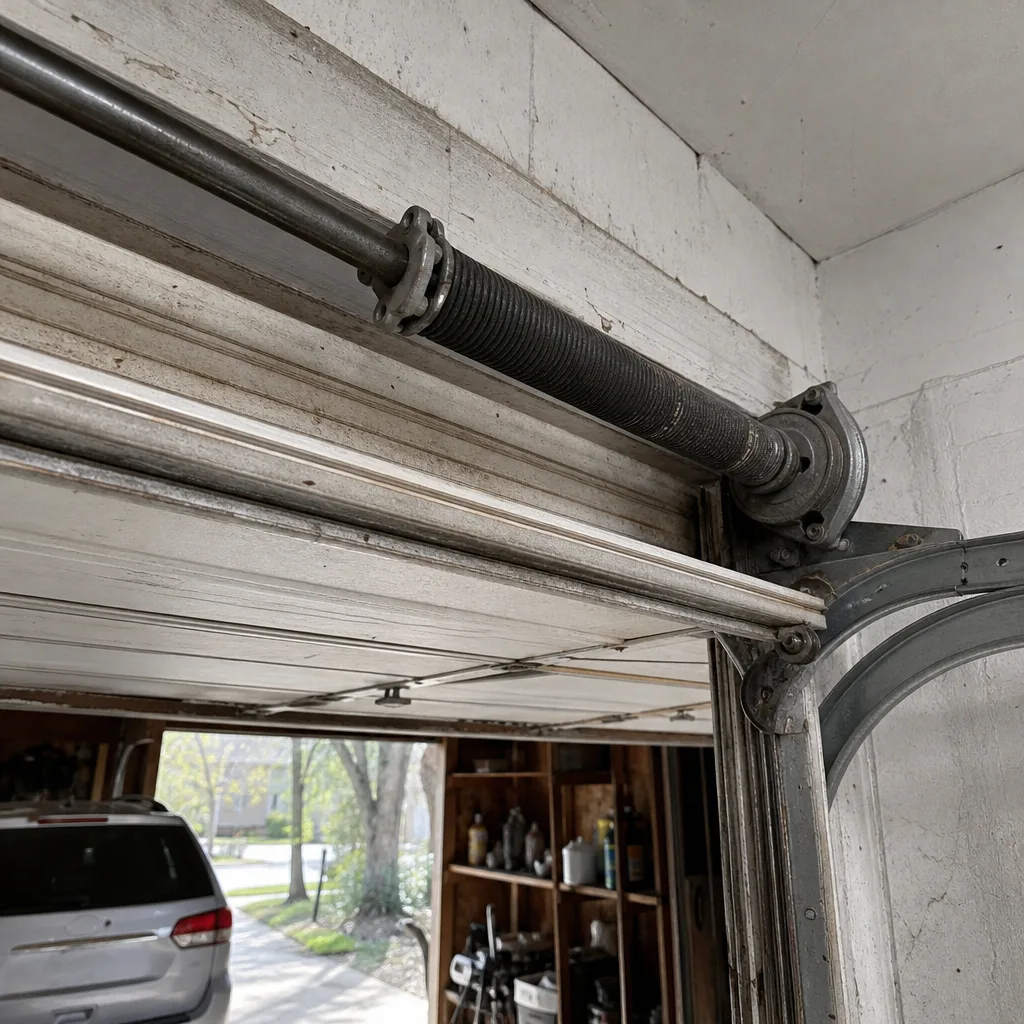 Before
 After
After